17 Jul 2026
Visual and Sound Design Influences on Decision Patterns in Modern Reel Games
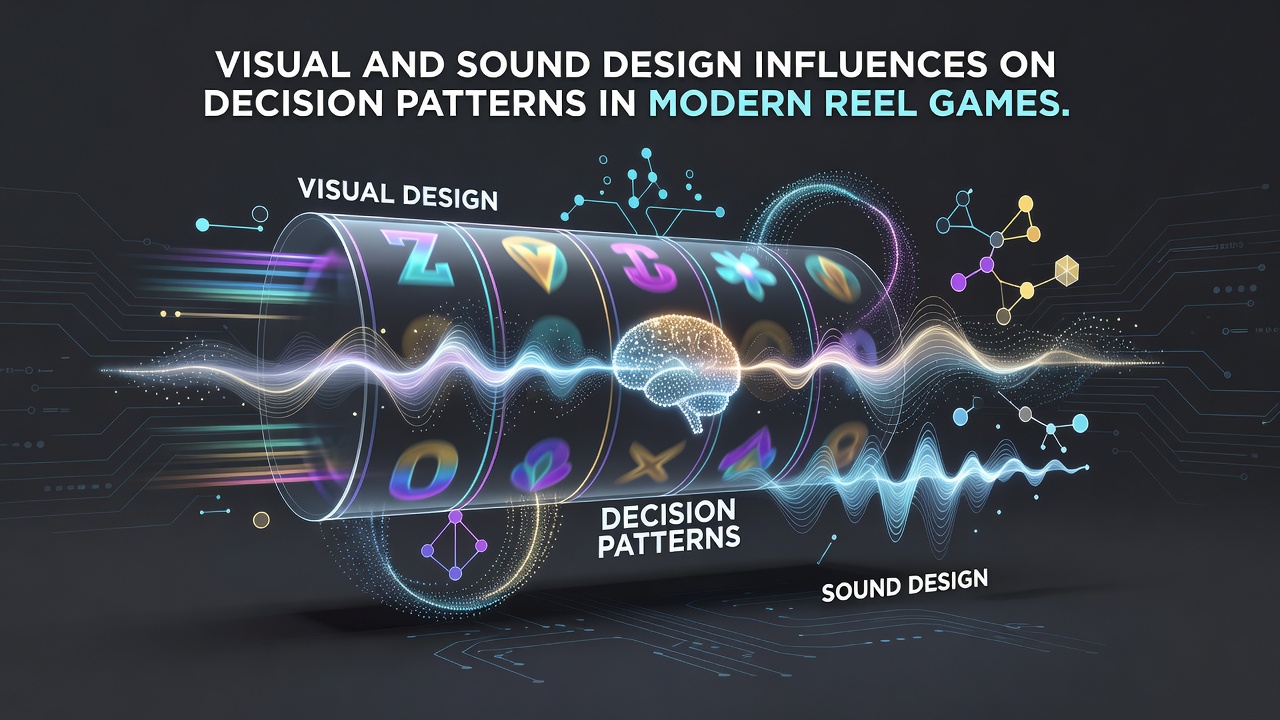
Modern reel games rely on carefully engineered visual elements and audio layers that shape how players approach each spin and adjust their betting choices over time. These design choices operate through established psychological mechanisms that researchers have documented across multiple studies of digital gambling platforms. Data from industry reports shows that specific combinations of color gradients, animation speeds, and audio triggers correlate with measurable shifts in session length and wager frequency among regular users.
Core Visual Mechanisms at Work
Reel symbols often feature high-contrast colors and rapid frame animations that draw attention to winning lines while de-emphasizing losses through subtler transitions. Observers note that near-miss configurations appear more frequently on screens with dynamic lighting effects, and these visuals prompt continued play because the brain registers them as close calls rather than outright defeats. Studies conducted by academic teams at the University of Nevada have quantified how symbol clustering patterns influence decision speed, with faster reel stops leading to quicker bet placements in controlled testing environments.
Background themes further modify player focus, as tropical or fantasy settings incorporate layered particle effects that activate during bonus rounds. Those patterns encourage extended engagement because the visual escalation signals potential reward escalation without requiring explicit instruction. Figures from the Australian Institute of Criminology indicate that themed visual progressions appear in over 70 percent of top-grossing titles released between 2024 and 2026, suggesting widespread adoption across global markets.
Sound Layers and Their Role in Timing Choices
Audio design in reel games combines anticipatory chimes with celebratory swells that mark wins, while softer ambient tracks fill gaps between spins. Research indicates that rising musical tension during reel spins correlates with higher average bet sizes, as players respond to the auditory buildup by committing additional credits. Developers calibrate these cues to align with reel deceleration moments, creating a seamless loop where sound reinforces visual outcomes.
Win celebrations typically employ ascending pitch sequences and layered percussion that last between two and four seconds, durations shown in laboratory settings to sustain player attention without causing fatigue. Conversely, loss sequences use brief, neutral tones that fade quickly so they do not interrupt momentum. Data collected from platform analytics reveals that titles incorporating adaptive volume scaling based on session duration maintain steadier play rates through evening hours compared with static audio implementations.

Combined Effects on Betting Sequences
When visual and audio elements operate in tandem, decision patterns shift toward more frequent small wagers interspersed with occasional larger bets during heightened sensory moments. Platform telemetry collected in 2025 demonstrates that synchronized light pulses and chime builds increase the probability of max-bet activation by roughly 18 percent within individual sessions. These synchronized moments occur most often during free-spin triggers or progressive jackpot teases, where multiple design channels converge.
Regional operators in North America and Asia-Pacific markets have adopted similar frameworks, though cultural preferences influence exact implementation. Canadian regulatory filings from 2025 note that testing protocols now require documentation of audio-visual timing to ensure compliance with responsible gaming standards. Meanwhile, European developers continue to refine particle density and harmonic complexity in response to player retention metrics gathered across multiple jurisdictions.
Emerging Trends Through Mid-2026
By July 2026 several major platforms had integrated real-time biometric feedback loops that adjust visual brightness and audio intensity based on detected player engagement signals. Early deployment data from select operators shows these adaptive systems reduce abrupt session terminations by modulating intensity during extended play periods. The approach builds on earlier static designs yet adds responsiveness that aligns with documented attention curves observed in prior research.
Hardware upgrades in land-based cabinets have also carried over into mobile reel titles, enabling higher frame-rate animations and spatial audio rendering on consumer devices. Industry associations tracking these rollouts report consistent year-over-year growth in titles featuring three-dimensional symbol interactions paired with directional soundscapes. Such combinations continue to refine the decision environment presented to users without altering core game mathematics.
Conclusion
Visual and sound design in modern reel games function as integrated systems that guide attention allocation and betting cadence through established sensory pathways. Research across academic and regulatory sources continues to map these relationships with increasing precision, providing operators with data-driven frameworks for future iterations. As platforms evolve through 2026 and beyond, the interplay between sight and sound remains a central factor in how players structure their participation within these environments.