24 Aug 2026
Tracing Loyalty Progressions from Mobile Deposits Through Tier Advancements to Final Withdrawals
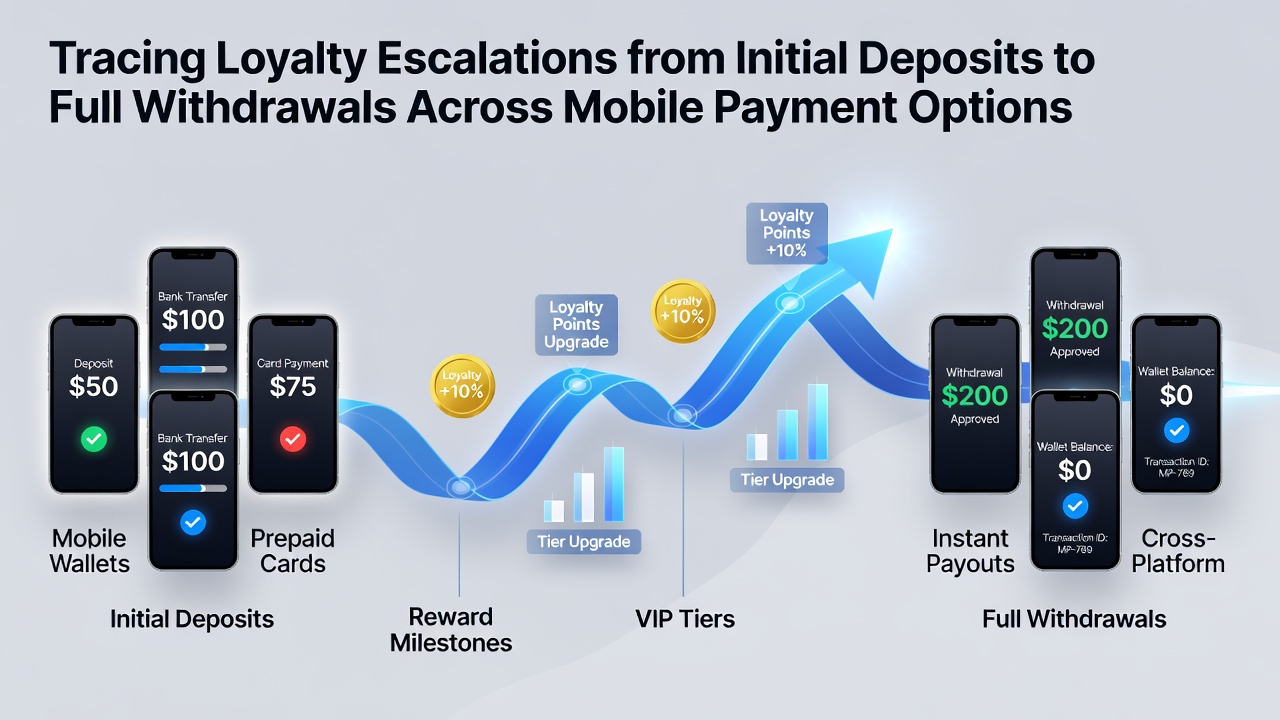
Digital gaming platforms record every deposit made through mobile payment systems and link those transactions directly to loyalty account updates that build over time. Players initiate funding via options such as Apple Pay, Google Pay, and various e-wallet services, each of which triggers an immediate credit to a base loyalty balance according to platform rules that assign points per dollar deposited. Those initial credits set the foundation for subsequent escalations that depend on wagering volume rather than deposit size alone.
Initial Deposit Mechanics Across Mobile Channels
Mobile payment providers process transactions in seconds while gaming operators verify funds and apply loyalty multipliers that differ by payment type and account status. Data compiled by regional regulators shows that deposits completed through integrated wallet applications often receive higher point allocations than those routed through traditional bank transfers because operators classify them as lower-risk activities. In August 2026 several platforms updated their verification protocols to require fewer manual checks for recurring mobile users, which shortened the time between deposit confirmation and loyalty balance updates.
Operators maintain separate ledgers that track deposit sources alongside play activity, allowing the system to escalate a player from entry-level status to mid-tier once cumulative deposits and associated wagers reach preset thresholds. These thresholds vary by jurisdiction yet follow consistent patterns documented in industry reports from the Nevada Gaming Control Board and similar agencies in other markets.
Loyalty Escalation Pathways Tied to Transaction History
After the first deposit clears, platforms monitor subsequent activity through automated scripts that increment loyalty meters each time a player completes qualifying bets. Escalation occurs in stages where reaching a new tier unlocks higher point accrual rates, faster withdrawal approvals, and access to exclusive payment options that carry lower fees. Observers note that players who route multiple deposits through the same mobile wallet frequently accelerate their progress because systems recognize consistent payment patterns and apply bonus multipliers automatically.
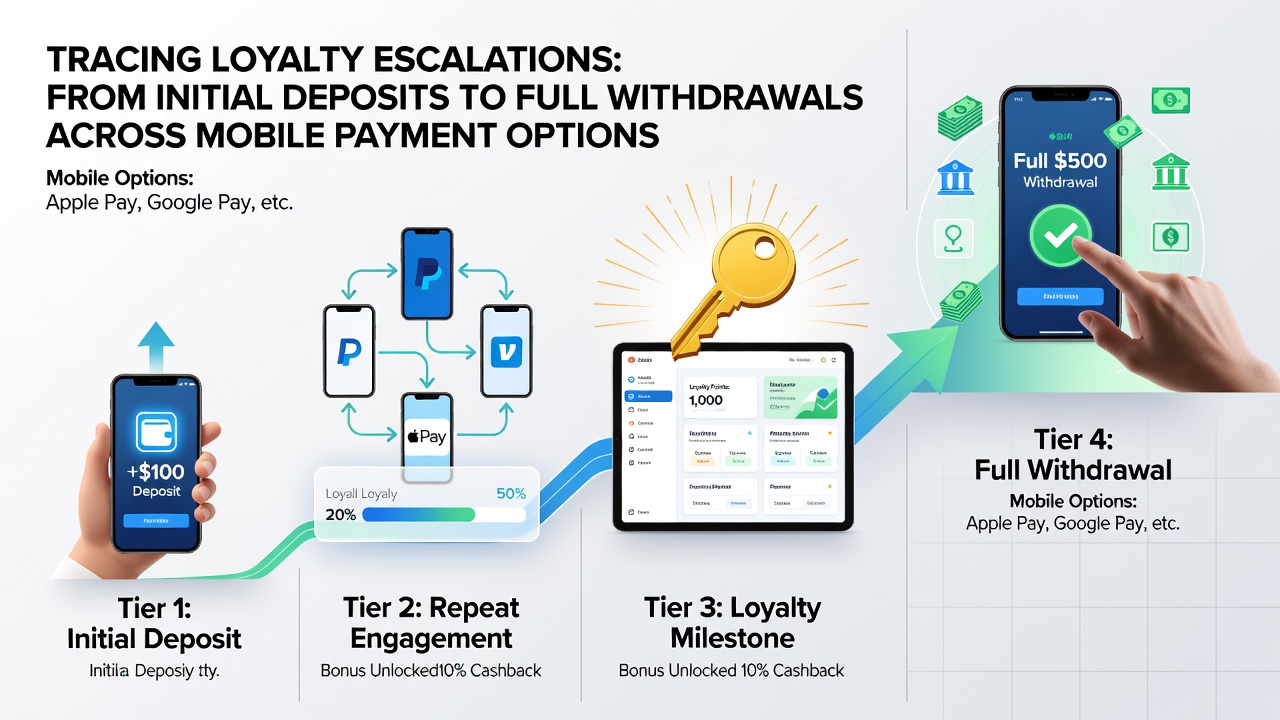
Research from academic centers studying digital gambling behavior indicates that tier advancement correlates strongly with total transaction count rather than single large deposits. A player who makes ten smaller deposits via mobile methods may reach the next reward level ahead of someone who completes one equivalent deposit through a slower channel. This pattern holds across markets where operators publish aggregated statistics through trade associations.
Withdrawal Verification Linked to Loyalty Records
Full withdrawal requests trigger a review process that cross-references the player's entire deposit and loyalty history before releasing funds. Higher-tier accounts receive priority processing because their transaction records already satisfy enhanced due-diligence requirements. Mobile payment reversals follow the same path in reverse, with operators confirming that loyalty points earned during the cycle remain valid only after the withdrawal clears without flags for irregular activity.
Systems maintained by operators in multiple jurisdictions log every withdrawal attempt alongside the original deposit methods, creating an audit trail that regulators examine during routine compliance checks. Figures released by the Malta Gaming Authority in mid-2026 highlighted how mobile-first accounts completed withdrawal cycles faster once loyalty tiers exceeded level three, a result of pre-verified payment profiles stored within the application.
Integration of Payment Options with Reward Structures
Each mobile payment method carries distinct rules for how quickly points convert into tangible rewards. E-wallets approved in a given region often pair with instant verification services that reduce the gap between deposit and point posting to under one minute. Those who maintain consistent use of a single approved channel see their loyalty records update without interruption, whereas switching between providers may reset certain streak-based bonuses until verification completes again.
Industry analyses from the Canadian Gaming Association show that withdrawal success rates rise when accounts remain within one primary mobile payment ecosystem throughout the loyalty cycle. The same reports note that platforms now embed these payment histories directly into tier algorithms so that every completed withdrawal reinforces eligibility for the next escalation level.
Conclusion
Tracing loyalty movements from the first mobile deposit through tier changes and final withdrawals reveals a closed data loop that operators use to manage risk and deliver consistent reward delivery. Regulatory filings from multiple regions document the same sequence of verification steps, point assignments, and audit requirements regardless of the specific payment applications involved. As platforms continue refining these connections, the linkage between deposit method, loyalty progression, and withdrawal approval remains the central mechanism that governs player advancement across digital gaming environments.